Redesigning the PhonePe Business app for merchants, focusing on improving information architecture (IA), user experience, and feature discoverability. The project involved identifying usability gaps through merchant interviews, field visits, and support data analysis, then restructuring the app to better align with real-world business workflows. Afthab led the effort to make complex financial tools, such as payments, settlements, and growth insights, more intuitive and accessible for small merchants, resulting in a more streamlined navigation system, simplified mental models, and clearer value communication across key journeys.

YEAR
2024
ROLE
SENIOR PRODUCT DESIGNER
Process in short
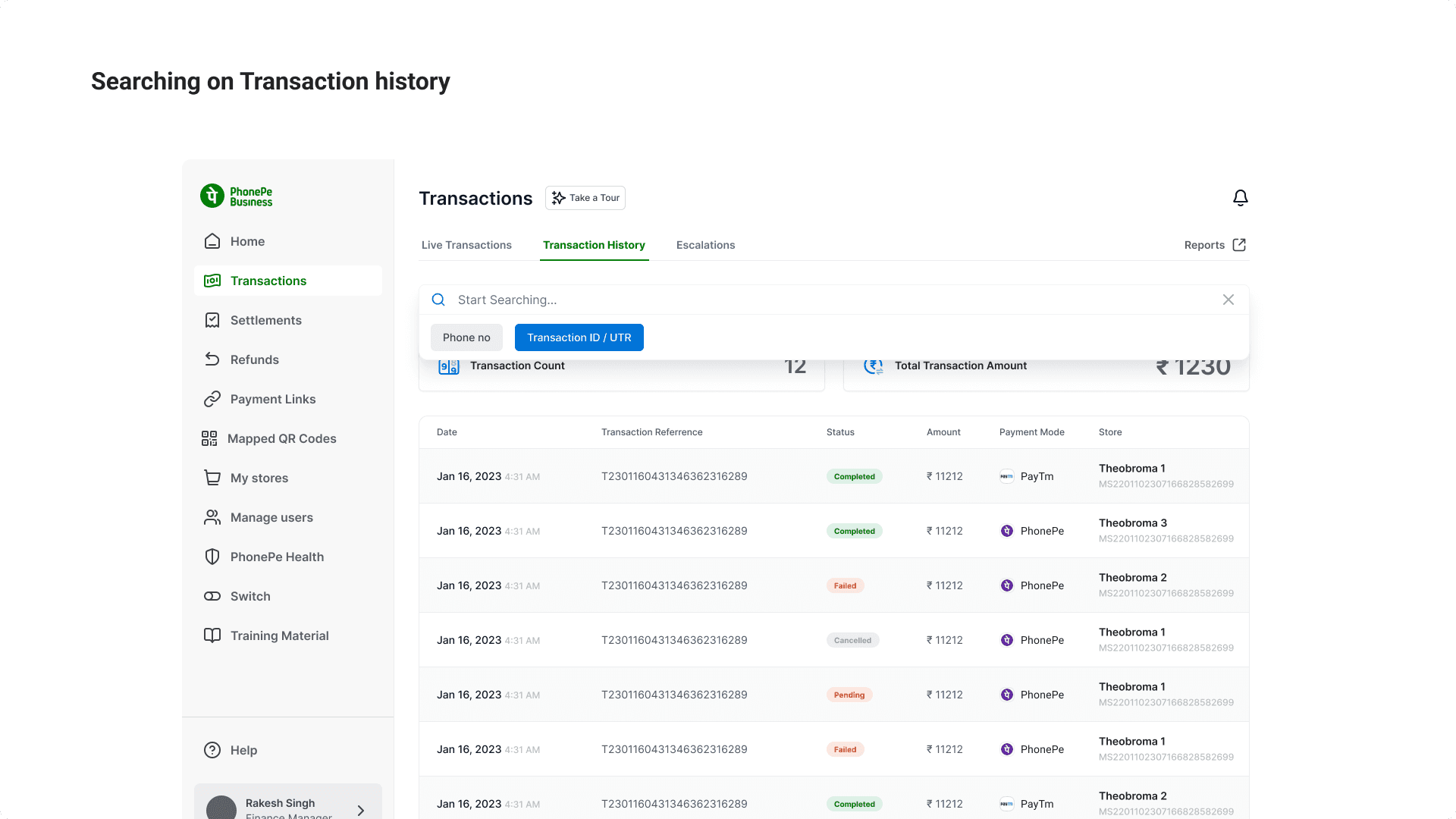
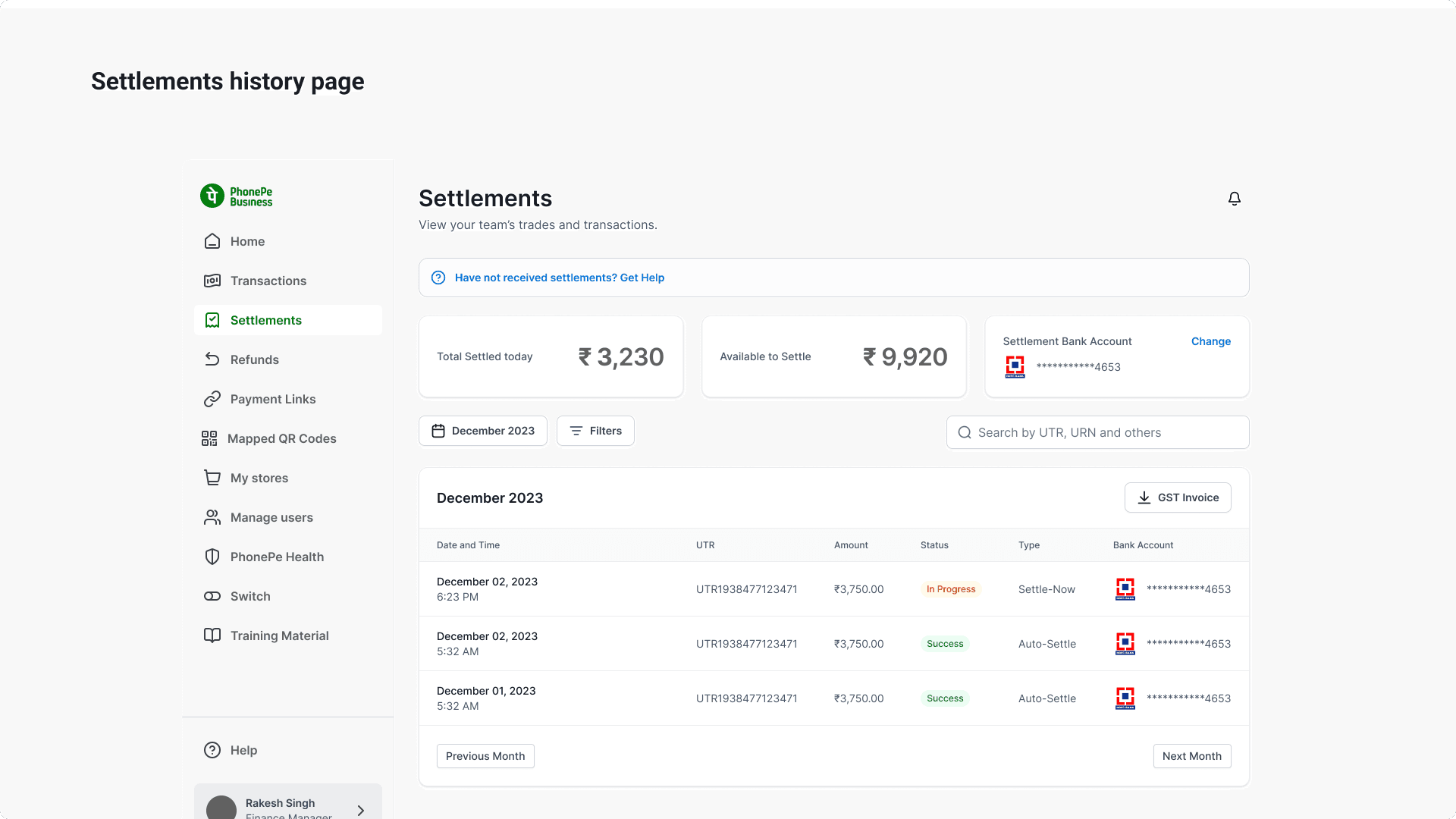
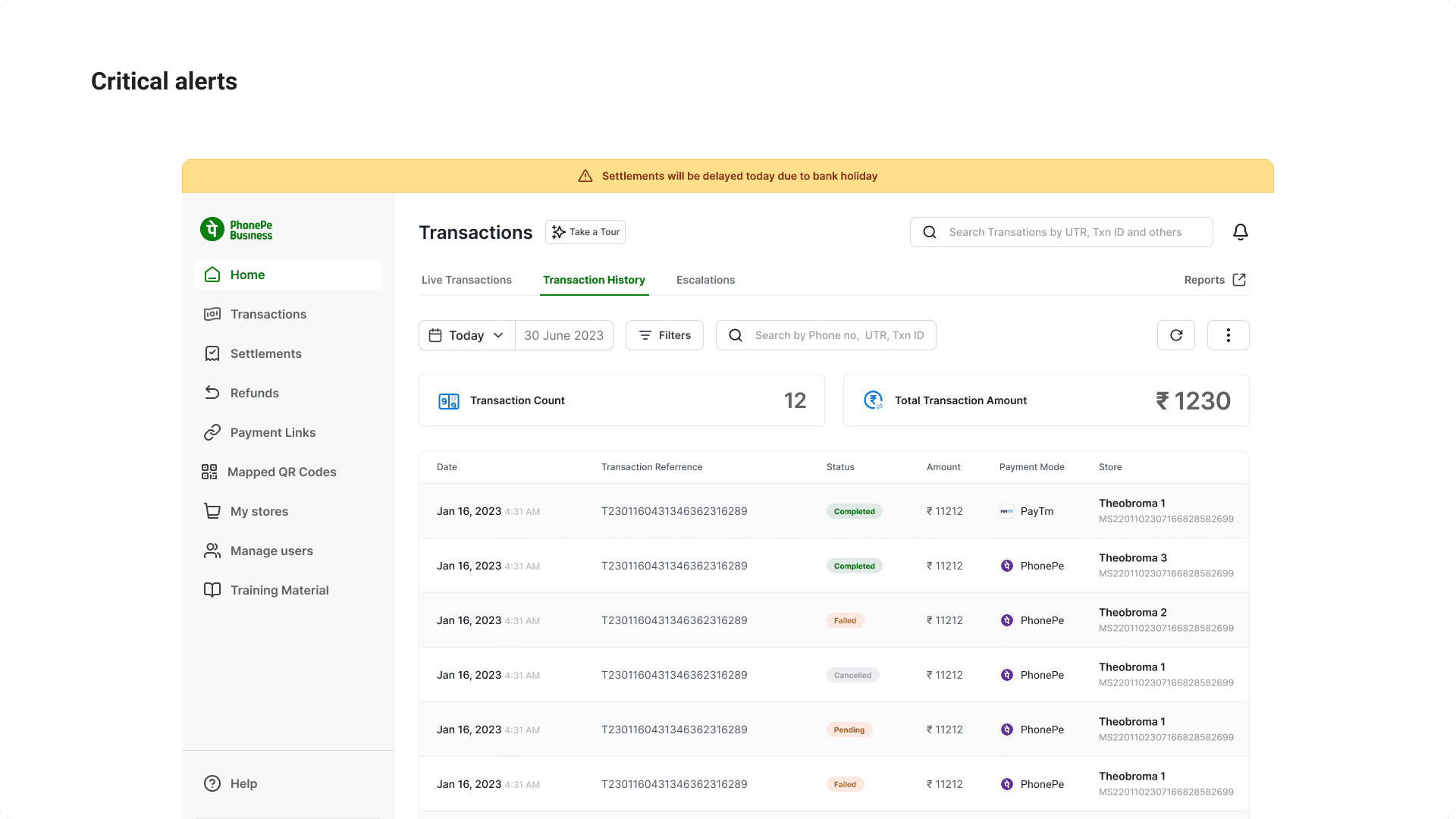
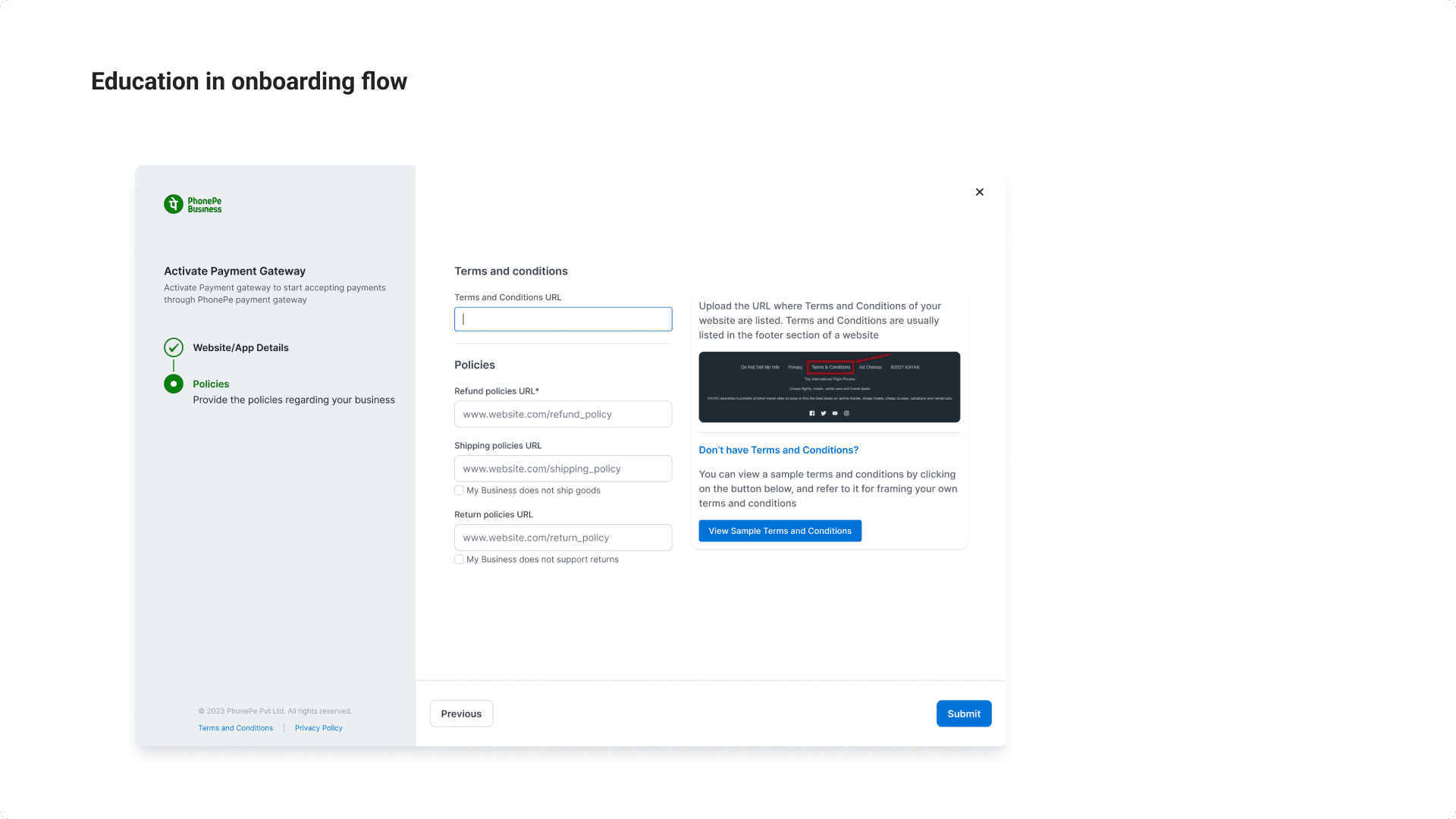
I began by mapping out how merchants actually navigated the PhonePe Business app, through store visits, cold calls, and support log reviews, to understand the everyday friction behind managing payments, settlements, and growth tools. What emerged was a fragmented experience: essential features buried under inconsistent labels and redundant entry points. I reframed the challenge as an information architecture redesign, not just a UI cleanup. My approach focused on aligning the app’s structure with the mental models of small business owners, grouping actions by intent rather than technical category. Drawing from patterns in enterprise dashboards and POS systems, I created a hierarchy that reduced navigation depth and surfaced high-frequency tasks upfront. Each IA prototype was tested with merchants and business support teams, ensuring the flow mirrored real-world priorities rather than organizational silos.
Smooth Scroll
This will hide itself!
This will hide itself!
Redesigning Clarity for Millions of merchants
OVERVIEW
Redesigning the PhonePe Business app for merchants, focusing on improving information architecture (IA), user experience, and feature discoverability. The project involved identifying usability gaps through merchant interviews, field visits, and support data analysis, then restructuring the app to better align with real-world business workflows. Afthab led the effort to make complex financial tools, such as payments, settlements, and growth insights, more intuitive and accessible for small merchants, resulting in a more streamlined navigation system, simplified mental models, and clearer value communication across key journeys.
YEAR
2024
ROLE
SENIOR PRODUCT DESIGNER
Process in short
I began by mapping out how merchants actually navigated the PhonePe Business app, through store visits, cold calls, and support log reviews, to understand the everyday friction behind managing payments, settlements, and growth tools. What emerged was a fragmented experience: essential features buried under inconsistent labels and redundant entry points. I reframed the challenge as an information architecture redesign, not just a UI cleanup. My approach focused on aligning the app’s structure with the mental models of small business owners, grouping actions by intent rather than technical category. Drawing from patterns in enterprise dashboards and POS systems, I created a hierarchy that reduced navigation depth and surfaced high-frequency tasks upfront. Each IA prototype was tested with merchants and business support teams, ensuring the flow mirrored real-world priorities rather than organizational silos.
Smooth Scroll
This will hide itself!
This will hide itself!
Redesigning Clarity for Millions of merchants
OVERVIEW
Redesigning the PhonePe Business app for merchants, focusing on improving information architecture (IA), user experience, and feature discoverability. The project involved identifying usability gaps through merchant interviews, field visits, and support data analysis, then restructuring the app to better align with real-world business workflows. Afthab led the effort to make complex financial tools, such as payments, settlements, and growth insights, more intuitive and accessible for small merchants, resulting in a more streamlined navigation system, simplified mental models, and clearer value communication across key journeys.
YEAR
2024
ROLE
SENIOR PRODUCT DESIGNER
Process in short
I began by mapping out how merchants actually navigated the PhonePe Business app, through store visits, cold calls, and support log reviews, to understand the everyday friction behind managing payments, settlements, and growth tools. What emerged was a fragmented experience: essential features buried under inconsistent labels and redundant entry points. I reframed the challenge as an information architecture redesign, not just a UI cleanup. My approach focused on aligning the app’s structure with the mental models of small business owners, grouping actions by intent rather than technical category. Drawing from patterns in enterprise dashboards and POS systems, I created a hierarchy that reduced navigation depth and surfaced high-frequency tasks upfront. Each IA prototype was tested with merchants and business support teams, ensuring the flow mirrored real-world priorities rather than organizational silos.
Smooth Scroll
This will hide itself!
This will hide itself!